
Trepat is a red grape variety native to the Conca de Barberà, in Catalonia, also known as trepadell. It makes light, fruity wines with good acidity and has traditionally been used for rosé wines and rosé cava. Since 2004 it has been revived as a fresh red wine with its own personality.
A guide by Celler Mas de la Creu (DO Conca de Barberà). Last reviewed: 5 October 2026. General facts about the grape are sourced at the end of the page.
What is Trepat?
Trepat (or trepadell) is a red grape variety from the Conca de Barberà, in Catalonia. The international grape register VIVC lists it under number 12633, with black berry colour. According to English Wikipedia, it has also been known by the synonyms Bonicaire, Embolicaire, Parrel, Trapat, Traput and Trepan. Not to be confused with the surname Trepat: this page is about the grape and the wine.
Origin and history of Trepat
Ampelographers believe Trepat is probably indigenous to the north-east of the Iberian Peninsula, and the DO Conca de Barberà describes it as a native variety of the Conca. For decades it went mostly into rosé wines. According to the DO, the first red Trepat wine was made in 1987, by carbonic maceration; from 1986 to 2004 the variety survived mainly in cooperatives making rosé, red Trepat winemaking was revived in 2004, and from 2009 it became a lasting trend.
Where is Trepat grown?
The Conca de Barberà is its home region. According to the DO, Trepat is also found in the Riu Corb-Baixa Segarra area and in the Conca de Tremp, and general sources also place it in the DO Costers del Segre. There is no recent official figure for planted area that we can cite, so we do not give one.
The Trepat grape at a glance
| Colour | Red (black) grape |
|---|---|
| Vigour | Vigorous variety with upright growth |
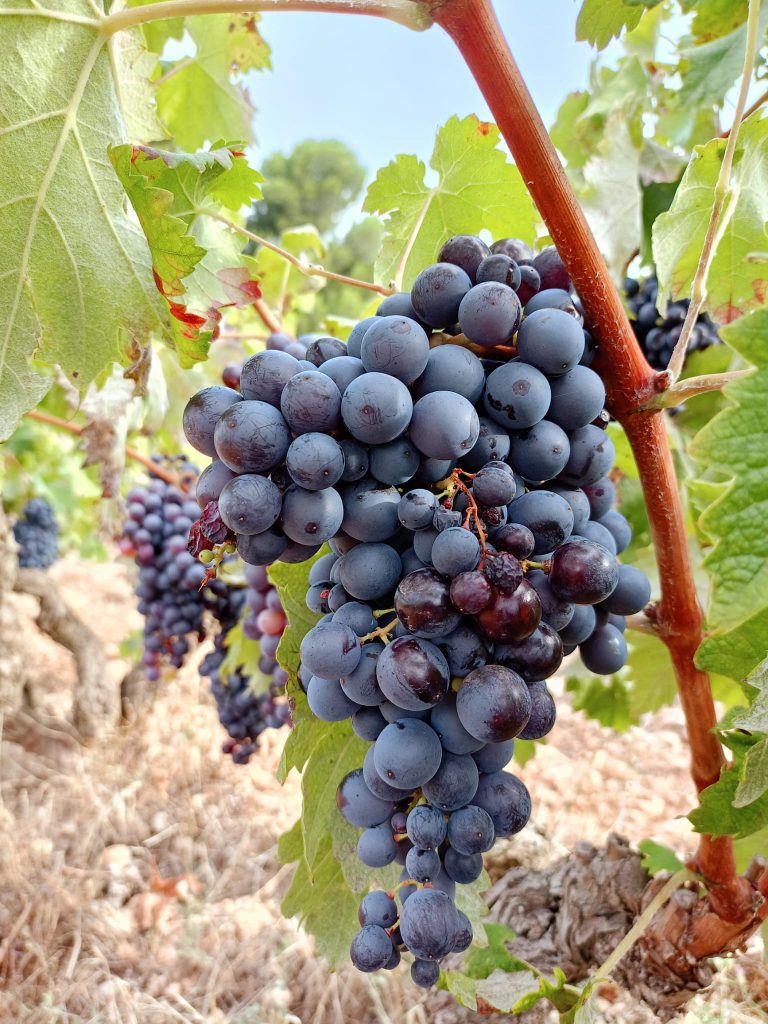
| Bunch | Large and compact (long and tight) |
| Berry | Large and round, with medium-thick skin |
| Cycle | Early budding and late ripening (late September to early October) |
| Yield | 8,000 to 12,000 kg/ha |
| Sensitivities | Spring frost and erinose; fairly resistant to botrytis |
| Soil and training | Dislikes drought and prefers cool soils; does well with short pruning |
Sources: DO Conca de Barberà and Wikipedia (see “Sources”).
What does Trepat wine taste like?
The DO Conca de Barberà describes Trepat wines as light and fruity, with good acidity and medium alcohol. Made as a rosé, it gives a light, fresh and fruity wine; as a red, a fresh wine whose colour and aroma make it unique. Catalan Wikipedia puts the lightest Trepat wines at a low 10–11% abv.
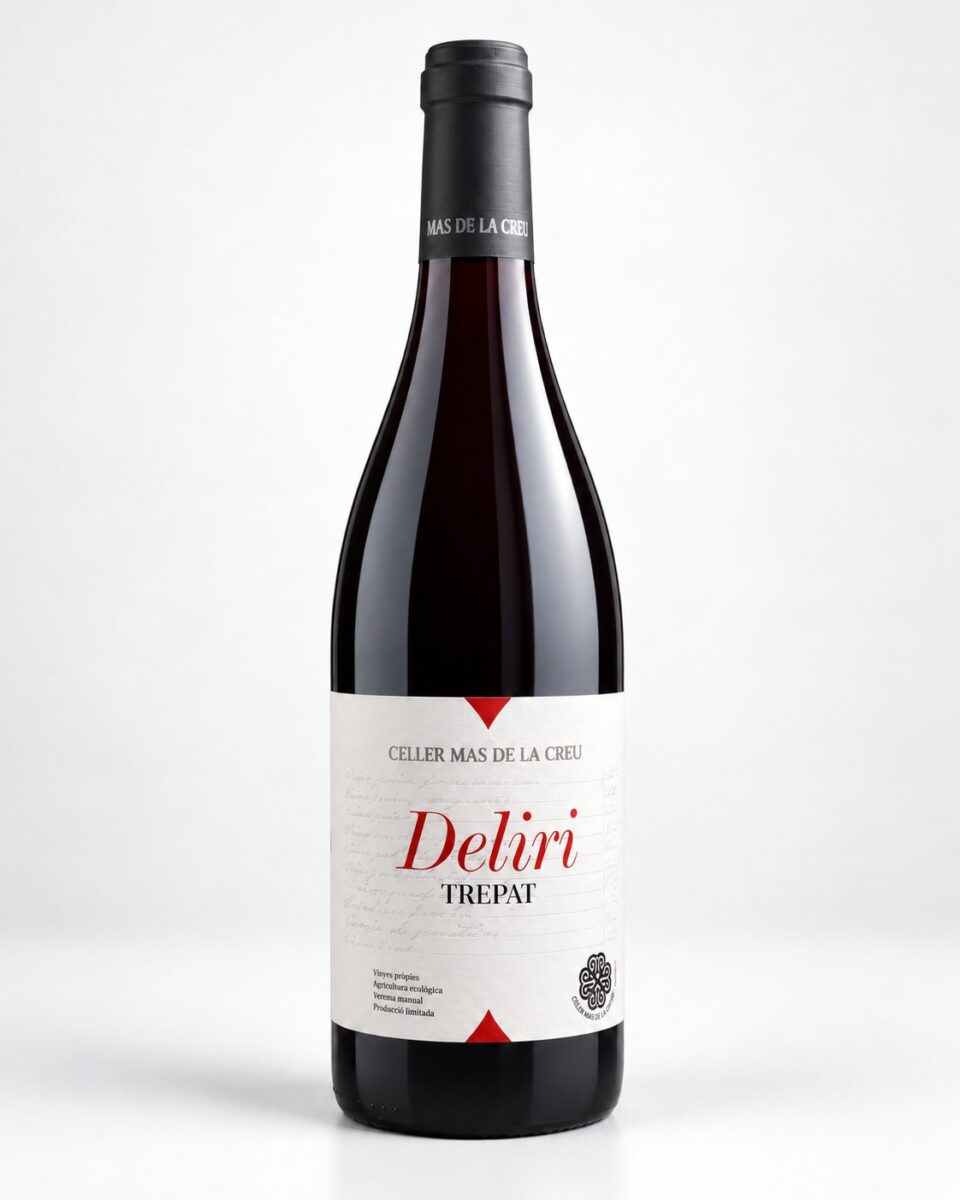
Old-vine Trepat fermented in foudre, such as Deliri and Elixir, has more structure and complexity than a young Trepat while keeping the freshness of the variety.
Trepat styles: red, rosé, ancestral and cava
- Young red: fresh, light and aromatic, to drink young. Ours is cup3.
- Old-vine red: more structured, fermented in oak foudre. Deliri Trepat 2025 ·Deliri Trepat 2025 and Elixir.
- Rosé: the traditional use of the variety. 14 Hores gets about 14 hours of skin contact.
- Ancestral sparkling: a single fermentation in the bottle. Frenètic, from Trepat and Parellada.
- Rosé cava: according to the DO, rosé cava is one of the main uses of Trepat. Cava Trepat Rosé Brut.
What to pair with Trepat
Fresh, light and with lively acidity, Trepat goes well with Mediterranean food: rice dishes, cured meats, soft cheeses and even bluefin tuna.
Trepat wines from Mas de la Creu
At Celler Mas de la Creu (formerly Celler Vidbertus) Trepat is at the heart of the project, with organic viticulture and hand harvesting.
- cup3: young Trepat with a small touch of Grenache.
- Deliri Trepat 2025: 100% old-vine Trepat, fermented in oak foudre. Best Trepat Wine 2026 and first prize in the Trepat reds category at the Sigillum Awards of the DO Conca de Barberà. The 2024 vintage scored 91 points from Andreas Larsson.
- Elixir: old-vine Trepat aged in large foudre.
- Frenètic: ancestral-method sparkling wine from Trepat and Parellada.
- 14 Hores: Trepat rosé.
- Cava Trepat Rosé Brut.
You can taste them at the winery in L’Espluga de Francolí on a winery visit and wine tasting, or find them in our online shop.
Trepat FAQ
What is Trepat wine?
Trepat wine is made from Trepat, a red grape native to the Conca de Barberà in Catalonia, also known as trepadell. It is grown mainly in the DO Conca de Barberà and also in the DO Costers del Segre. It makes fresh, light, fruity wines and has mostly been used for rosé wines and rosé cava.
Where is the Trepat grape grown?
Trepat is grown mainly in the DO Conca de Barberà, its home region. According to the DO, it is also found in the Riu Corb-Baixa Segarra area and the Conca de Tremp, and general sources place it in the DO Costers del Segre.
What does Trepat wine taste like?
Trepat wine is usually light, fresh and fruity, with good acidity and moderate alcohol. As a rosé it is especially fresh; as a red it is fresh, with its own colour and aroma. Old-vine Trepat fermented in foudre, such as Deliri or Elixir, has more structure.
What food goes with Trepat?
Trepat pairs with light Mediterranean food: rice dishes, cured meats, soft cheeses and bluefin tuna. Its freshness and lively acidity make it a very food-friendly wine.
What is the best Trepat wine?
According to the 2026 Sigillum Awards of the DO Conca de Barberà, the best Trepat wine is Deliri Trepat 2025, by Celler Mas de la Creu, which also won first prize in the Trepat reds category. The awards were presented on 29 August 2026 in L’Espluga de Francolí.
Sources
- DO Conca de Barberà, Varietats: el Trepat (accessed 5/10/2026).
- Wikipedia, Trepat (ca) and Trepat (en).
- VIVC, Trepat variety passport, no. 12633.
- Sigillum Awards 2026: Vadevi, El Nacional and EFMR.